
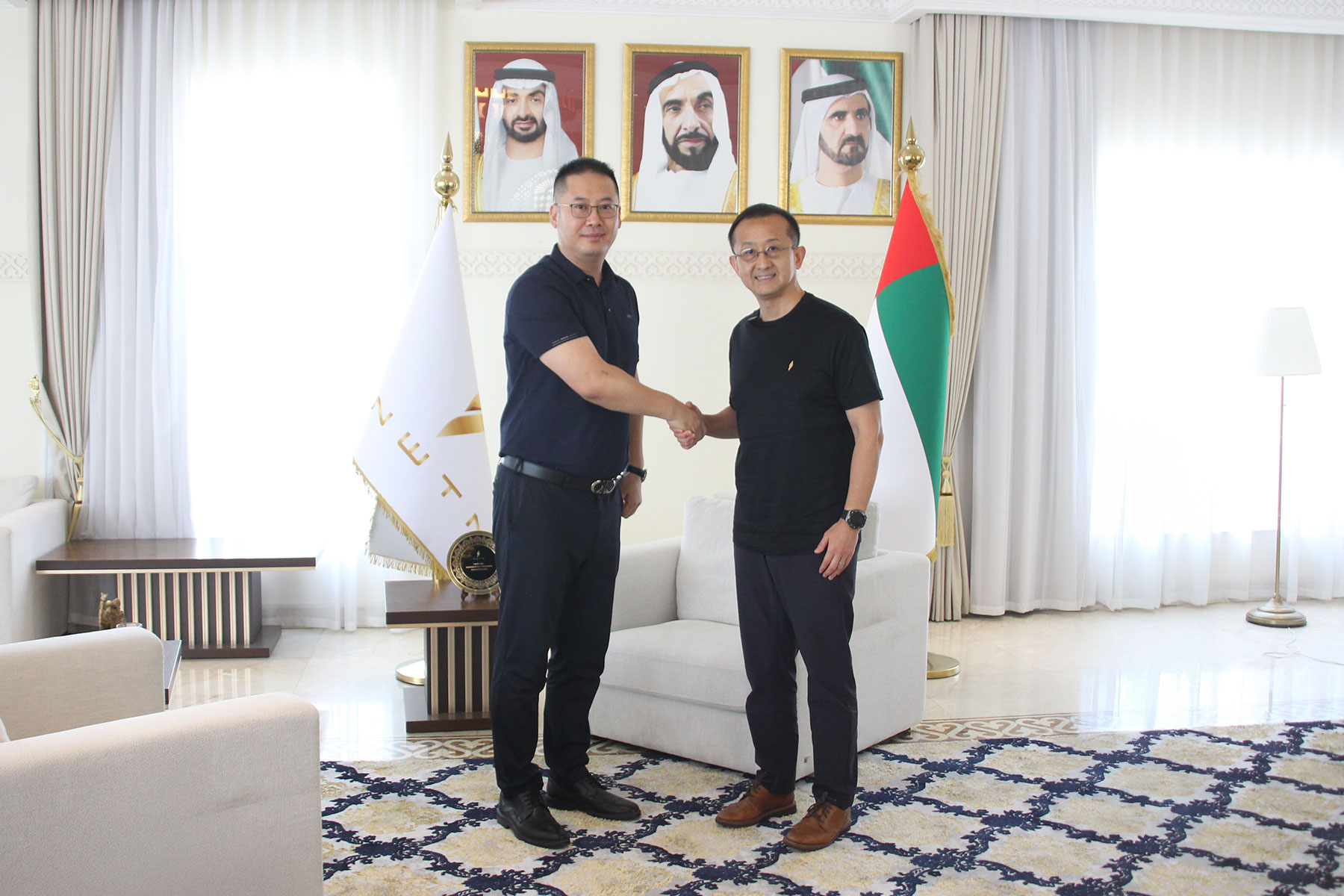
Amid the industry dilemma of “either go global or be left behind, yet risks emerge once going global”, Benjamin Zhai, Global CEO of NWTN Group, combines the group’s experience in the Middle East to decode how Chinese enterprises can establish a presence in the UAE, covering market opportunities, core logic and talent strategies.
NWTN, a China-originated smart tech enterprise rooted in the UAE, is Abu Dhabi’s first holder of a new energy vehicle production license and the only UAE-based EV firm listed in the US. Its transformation from a Chinese enterprise to a global platform sets a model for Chinese brands expanding in the Middle East.
Zhai notes the UAE is chosen as a core overseas base for its “familiarity” and “uniqueness”: it has a mature business environment with a corporate structure, common law system and elite background similar to Europe and the US, lowering cross-border cooperation barriers. Also, 88% of its 11 million-plus population are expats, attracting global entrepreneurs, with vitality comparable to Shanghai’s boom 20 years ago. Crucially, the UAE has unrivalled “time and space” advantages. Geographically, as a link between Eastern and Western civilisations, it is only 4-5 hours away from Europe, Asia and India, serving as a natural hub for multi-regional markets. Amid global trade wars, it imposes ultra-low tariffs on countries like the US, Europe, India, China and those in the Middle East and Africa, becoming a “trade pure land” and a preferred springboard for Chinese enterprises to bypass barriers.
Breaking Through Core Challenges of Overseas Expansion: The Key to Landing from Strategy to Talent
For Chinese enterprises in the UAE, Zhai proposes a “dual-dimensional” strategy: first, leverage the UAE’s location and tariff dividends based on the “geography + time” principle; second, assess “market attractiveness + enterprise competitiveness” rationally. The UAE has only over 10 million people, and the GCC’s total population is smaller than some Chinese provinces, so enterprises must use it as a fulcrum for global layout, just like NWTN gaining Middle Eastern sovereign funds’ trust via brand, technology and talent. Zhai emphasises that talent is the biggest bottleneck. China has a “rhino horn-shaped” talent structure (scarce top talents, redundant grassroots), while the UAE has a “dumbbell-shaped” one (sufficient executives and grassroots, but a severe shortage of middle-tier talents like technical and legal staff), with middle-tier salaries twice those in China. He advises enterprises to abandon cost-oriented thinking, make long-term talent plans and reserve locally needed middle-tier talents in advance for localisation.
Injecting Practical Reference into Brand Overseas Expansion
Benjamin Zhai’s sharing is not only a summary of NWTN’s experience in deeply cultivating the UAE, but also a “pitfall avoidance guide” for Chinese enterprises expanding into the Middle East. By seizing the UAE’s “time and space” opportunities and solving talent issues, Chinese enterprises can shift from “going global” to “standing firm”, unlocking growth in the Middle East and global markets.